The End of Localhost: Why Anthropic Bought Bun for Billions
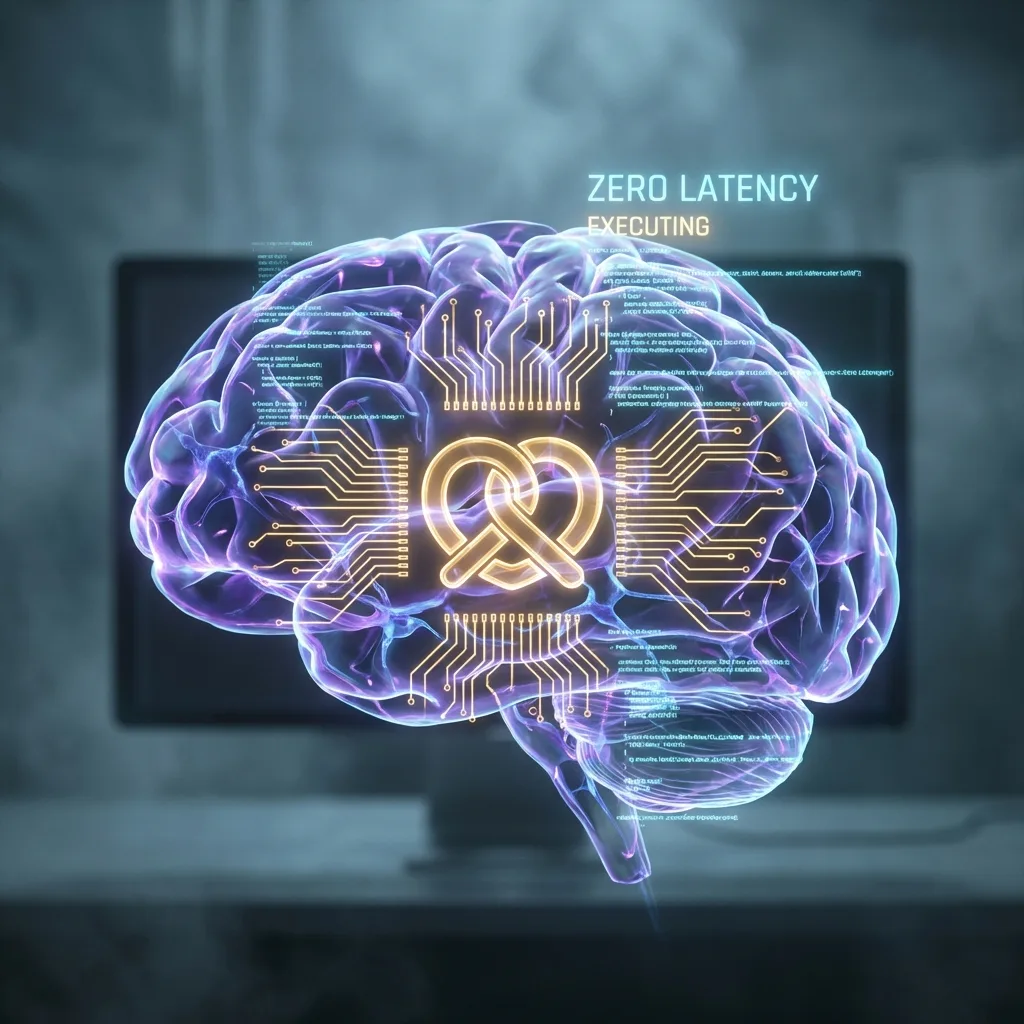
Anthropic acquired Bun right after Claude Code hit $1B in annual revenue. Fusing the reasoning model with the runtime creates the first agentic runtime.
✨TL;DR / Executive Summary
Anthropic acquired Bun right after Claude Code hit $1B in annual revenue. Fusing the reasoning model with the runtime creates the first agentic runtime.
💡 TL;DR (Too Long; Didn't Read)
Anthropic acquired Bun shortly after Claude Code hit $1 billion in annual revenue. This isn't just a talent acquisition; it's the birth of the "Agentic Runtime". By fusing the reasoning model (Claude) directly with the execution infrastructure (Bun), we eliminate the latency between "thinking" and "testing". AI no longer just suggests code for you to copy; it runs, fixes, and packages it autonomously in milliseconds. We are witnessing the death of localhost as we know it and the rise of autonomous development environments.
If you blinked last week, you missed the most important move of the decade in development tools. It wasn't the launch of yet another language model. It wasn't another JavaScript framework.
It was the check Anthropic signed to acquire the Bun team.
At first glance, it seems random. Why would an AI company buy a JavaScript/TypeScript runtime? Bun is famous for being fast, yes, but it's not "AI". It's "boring", low-level infrastructure. It's Zig, it's memory allocation, it's the event loop.
But if you look at the numbers—specifically the fact that Claude Code reached $1 billion in ARR (Annual Recurring Revenue) in just 6 months—the penny drops.
Anthropic didn't buy Bun to make npm install faster. They bought Bun to remove the human from the execution loop.
In this article, we'll dissect what this merger means, why the current "Copilot" architecture is dead, and how the concept of "Agentic Runtime" will redefine what it means to be a Software Engineer in 2026.
1. The $1 Billion Bottleneck: Context Latency
To understand the acquisition, we need to understand the success of Claude Code. Reaching $1 billion in 6 months makes it the fastest-growing software product in history, surpassing even the original ChatGPT.
Why did Claude Code win? Because it stopped being a "chat" and became an "agent".
The Old Cycle (Github Copilot, 2023-2024)
- Human types code.
- AI suggests completion (text).
- Human accepts.
- Human saves the file.
- Human runs the build/tests.
- Error. Human reads the error.
- Human asks AI for help.
In this model, AI is passive. It generates text but has no agency over the environment. The "runtime" (Node.js, Python, JVM) is a black box to the AI. It doesn't "see" execution; it only "hallucinates" what should happen.
The Claude Code Cycle (2025)
Claude Code tried to close this loop. It reads your files, proposes edits, and runs commands in your terminal. But it still ran into a physical wall: operating system latency.
For the AI to test a hypothesis ("does this function break if input is null?"), it needed to:
- Write the file to disk.
- Invoke an external process (node, bun, python).
- Wait for the process to start (cold start).
- Parse the terminal output (stdout/stderr).
This is slow. For us, 500ms is imperceptible. For an AI model that "thinks" in parallel tokens, having to wait for the OS file system is an eternity. It's like you had to restart your computer for every line of code you wrote.
Anthropic realized that to take the next leap in productivity—from "assistant" to "autonomous engineer"—AI couldn't be a user of the runtime. It needed to BE the runtime.
2. Why Bun? The Engineering Behind the Choice
Bun isn't just "fast". It is monolithic and introspective.
Unlike the Node.js ecosystem, where you have node (runtime), npm (package manager), jest (test runner), webpack/vite (bundler), and tsc (transpiler) as separate tools taped together, Bun is all of this in a single binary written in Zig.
The "Agentic Runtime" Architecture
With the acquisition, Anthropic is building what we call a Deeply Integrated Agentic Runtime (DIAR).
Imagine the following scenario:
Claude (the model) generates an AST (Abstract Syntax Tree) of a JavaScript function.
Instead of converting this AST into text ("source code"), saving it to a .js file, and telling Bun to read that file...
Claude injects the AST directly into the memory of the Bun process.
- Zero Disk I/O: Code never touches the SSD. It exists in shared memory between the inference model and Bun's JavaScriptCore engine.
- Microsecond Feedback: Bun executes the function. If it errors, it doesn't spit text into the terminal. It returns the structured error object and memory state (stack trace + variable values) directly to Claude's context.
- Self-Correction Loop: Claude sees the error and memory state instantly. It adjusts the AST and re-executes.
This allows the AI to perform the "Write -> Test -> Fix" cycle thousands of times per second.
When you ask "create a users API", Claude won't hand you the first draft. It will have written, tested, failed, corrected, and optimized the code 500 times in the time it takes you to blink.
Bun was the only piece of infrastructure capable of enabling this due to its unified architecture and extreme startup performance.
3. The End of "It Works on My Machine"
The second-order consequence of this acquisition is environment standardization.
If AI is the runtime, the concept of "local environment" begins to die. Claude Code doesn't run "on your machine" in the traditional sense. It runs in an ephemeral container, managed by Anthropic, where Bun + Claude are the operating system.
You no longer download the repository. You don't install dependencies (npm install is a thing of the past).
You open the IDE (or browser), and the project state is streamed to you. AI manages dependencies. If a library needs a specific version of libc, AI resolves it.
The New "Hello World"
How it was:
- Install Node.
npm init.- Create
index.js. console.log("Hello").node index.js.
How it will be (Bun + Claude):
"Claude, I need an HTTP endpoint that receives JSON and saves it to Postgres."
Claude Code:
- Instantiates an in-memory micro-database (yes, Bun has native SQLite support and fast drivers).
- Writes the handler.
- Creates integration tests.
- Fuzz-tests the endpoint with malicious inputs.
- Hands you the production URL.
All this happens in seconds, without you seeing a single tsconfig.json configuration file.
4. The Economic Impact: Why $1 Billion is Cheap
The fact that Claude Code hit $1B in ARR so quickly scared Silicon Valley. For context:
- AWS took years to reach $1B.
- Slack, Zoom, Salesforce... all took much longer.
This signals that the Software Engineering Automation market is much larger than the "productivity tools" market.
Companies aren't paying $30/month for a developer to type faster. They are paying $500/month for an agent that replaces the need to hire interns for menial tasks, or that allows a Senior Engineer to do the work of an entire team.
The Bun acquisition solidifies Anthropic's position not as a "chatbot" company, but as a Cloud Computing 2.0 company.
If AWS sells "compute" (EC2) and "storage" (S3), Anthropic now sells "executable intelligence". You don't rent a server; you rent a "Senior Engineer + Optimized Runtime".
5. What Changes for You, Engineer?
This is the part that causes anxiety. If AI can write, test, and fix code in a closed loop in memory, where do we fit in?
The Death of the "CRUD Junior"
The job of taking a Jira ticket ("Add a 'phone' field to the users table") and implementing it in the backend, frontend, and database... is over. The Agentic Runtime does this with its eyes closed, with tests, and without typos.
The Rise of the "System and Intent Engineer"
Your job stops being "translating intent to syntax" (coding) and becomes:
- Defining Constraints: Telling the AI what cannot happen. (Ex: "Never expose PII data in these logs").
- High-Level Architecture: Deciding which systems should be built, not how.
- Business Logic Review: AI can write code that works but does the wrong thing for the business. You are the guardian of semantics.
- Debugging Complex Systems: When the distributed system fails in a way AI didn't predict (and it will), you need to understand the guts.
Learn Zig? Maybe.
Ironically, the Bun acquisition might increase interest in Zig and Rust. Why? Because we need to build the tools for the AIs. Bun was written in Zig for performance. The next generations of infrastructure (vector databases, inference engines) will need that extreme performance to keep up with the speed of AI thought.
Conclusion: The Agentic Era Has Begun
Anthropic's purchase of Bun is ground zero for the Agentic Era in programming.
Until now, we treated AI as a smart consultant sitting next to us (Pair Programmer). From now on, AI is the engine that moves the car. We just hold the steering wheel and point to the destination.
Localhost's days are numbered. Compile time's days are numbered. The frustration of environment configuration's days are numbered.
And maybe, just maybe, the boring part of programming is finally over, leaving us free to solve the problems that actually matter. Or else, we're all about to become robot managers.
Either way, it's good to keep your architecture knowledge sharp. You're going to need it.
This article is part of gsstk's special coverage on the trends defining 2025. Follow us for hype-free technical analysis.